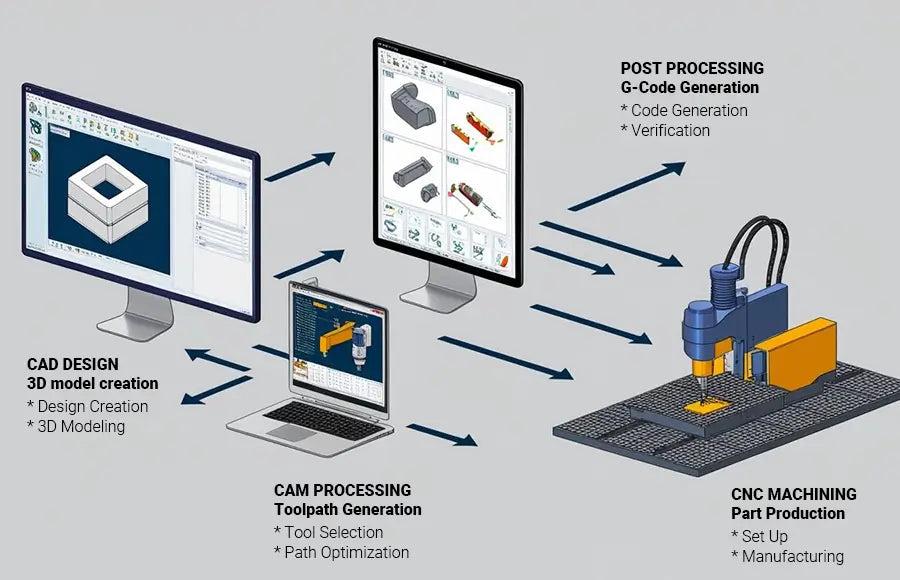
In today’s highly competitive manufacturing environment, precision, efficiency, and speed are no longer optional—they are essential. Manufacturers are constantly under pressure to reduce production costs, shorten lead times, and maintain increasingly tight quality standards.
While advanced CNC machines often receive most of the attention, the true success of a machining project begins long before the machine starts cutting material. The real challenge lies in transforming a complex CAD model into an optimized, reliable, and production-ready machining process.
This is where CAM programming services play a critical role.
A well-developed CAM strategy bridges the gap between engineering design and manufacturing execution, ensuring that every toolpath, cutting parameter, and machining operation contributes to maximum productivity and quality.
At TAS US, we help manufacturers, machine shops, OEMs, and industrial equipment companies streamline CNC production through expert CAM programming and manufacturing engineering support.
What Is CAM Programming?
Computer-Aided Manufacturing (CAM) is the process of using specialized software to generate CNC machining instructions from CAD models.
CAM software converts engineering designs into machine-readable code that controls:
- Tool movements
- Cutting speeds and feeds
- Machining sequences
- Multi-axis positioning
- Collision avoidance
- Surface finishing operations
However, professional CAM programming involves much more than simply generating G-code.
An experienced CAM engineer must understand how design intent, material behavior, cutting dynamics, tooling limitations, and machine capabilities interact throughout the manufacturing process.
Without this expertise, even the most advanced CNC machine can produce inefficient toolpaths, excessive cycle times, poor surface finishes, or costly scrap.
The Difference Between Running a CNC Machine and Optimizing CNC Manufacturing
Many manufacturers discover that creating a successful machining process requires far more than operating a machine.
The difference between average and exceptional production performance often comes down to the quality of CAM programming.
Professional CAM engineers evaluate multiple factors before a single toolpath is generated.
Part Geometry and Engineering Requirements
Every component presents unique manufacturing challenges.
Complex geometries often require careful consideration of:
- Tight dimensional tolerances
- Surface finish requirements
- Thin-wall features
- Deep cavities
- Undercuts
- Multi-sided machining operations
A successful CAM strategy must account for these requirements while maintaining efficiency and repeatability.
Material Behavior and Machinability
Different materials respond differently to cutting forces.
For example:
- Aluminum allows aggressive machining strategies with high material removal rates.
- Stainless steel generates significant heat and requires optimized cutting conditions.
- Titanium demands specialized toolpath strategies to reduce tool wear and maintain dimensional stability.
Understanding material behavior is essential for preventing excessive tool consumption and production delays.
Tooling Strategy and Cutting Efficiency
Tool selection directly impacts machining performance.
An optimized CAM program considers:
- Tool engagement
- Chip evacuation
- Tool life
- Material removal rate
- Surface quality
- Cycle time reduction
Modern high-efficiency machining strategies can significantly improve productivity while extending cutting tool life.
Fixture Design and Workholding Solutions
Even the best toolpath can fail if the workpiece is not properly secured.
CAM engineers often collaborate with manufacturing teams to develop effective:
- Fixture concepts
- Workholding strategies
- Datum structures
- Setup planning
Proper workholding reduces vibration, improves accuracy, and increases process stability.
Multi-Axis Machining Expertise
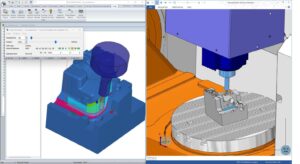
As component complexity increases, manufacturers increasingly rely on:
- 3-axis machining
- 4-axis machining
- Indexed 5-axis machining
- Simultaneous 5-axis machining
Advanced multi-axis CAM programming enables manufacturers to reduce setups, improve accessibility, and achieve superior surface finishes while minimizing production time.
Why High-Quality CAM Programming Delivers Significant Business Value
Many companies focus on machine investments while overlooking the impact of process engineering.
In reality, optimized CAM programming often delivers some of the highest returns on investment within a manufacturing operation.
Reduced Cycle Time
Inefficient toolpaths increase machine utilization costs and reduce throughput.
Professional CAM programming can:
- Eliminate unnecessary air cutting
- Optimize tool engagement
- Improve material removal rates
- Reduce setup changes
The result is shorter cycle times and increased machine productivity.
Lower Risk of Costly Errors
Programming mistakes can lead to:
- Machine crashes
- Tool breakage
- Damaged fixtures
- Scrapped parts
- Production downtime
CAM simulation and verification help identify potential issues before production begins.
Organizations such as SME consistently emphasize the importance of digital manufacturing workflows and simulation technologies in reducing production risk.
Improved Surface Finish and Accuracy
Surface quality directly impacts product performance, customer satisfaction, and downstream operations.
Optimized finishing strategies can:
- Improve surface integrity
- Reduce secondary operations
- Maintain tight tolerances
- Enhance product quality
This is particularly important in industries such as aerospace, medical devices, and precision industrial equipment.
Extended Tool Life
Tooling costs represent a significant portion of machining expenses.
Advanced toolpath strategies help:
- Reduce heat concentration
- Minimize tool deflection
- Improve chip evacuation
- Maintain consistent cutting loads
The result is longer tool life and lower operating costs.
Increased Manufacturing Scalability
A robust CAM process creates consistency across production runs.
Manufacturers can scale operations more efficiently while maintaining quality standards and predictable production outcomes.
Why Manufacturers Are Increasingly Outsourcing CAM Programming
Many machine shops and manufacturers face growing challenges:
- Shortage of experienced CAM engineers
- Increasing project complexity
- Demand for 5-axis programming expertise
- Tight customer deadlines
- Rising labor costs
Rather than hiring and training specialized personnel internally, many organizations now outsource CAM programming to experienced engineering partners.
Outsourcing provides access to highly skilled CAM specialists without the overhead associated with full-time staffing.
This allows manufacturers to focus on production while benefiting from advanced engineering support.
How TAS US Supports Manufacturers Through CAM Programming Services
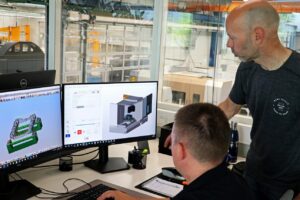
At TAS US, we serve as an engineering extension of your manufacturing team.
Our CAM programming services are designed to help manufacturers improve productivity, reduce risk, and accelerate production readiness.
Our capabilities include:
CAM Programming Services
We develop optimized CNC programs for:
- 3-axis machining
- 4-axis machining
- Indexed 5-axis machining
- Simultaneous 5-axis machining
Using customer-supplied CAD data, we generate production-ready toolpaths tailored to machine capabilities and manufacturing objectives.
Manufacturing Engineering Support
Beyond CAM programming, we assist with:
- Machining process planning
- Tooling recommendations
- Fixture and workholding concepts
- Setup optimization
- Production feasibility reviews
This broader engineering perspective helps manufacturers avoid common production bottlenecks before they occur.
CNC Process Optimization
For existing production programs, we help identify opportunities to:
- Reduce cycle times
- Improve surface quality
- Increase tool life
- Minimize machining risks
- Improve overall equipment efficiency
Integrating CAM Programming Into a Digital Manufacturing Strategy
Modern manufacturing increasingly relies on digital workflows that connect design, engineering, and production.
When integrated effectively, CAD, CAM, simulation, and CNC operations create a more efficient and predictable manufacturing environment.
Manufacturers pursuing digital transformation initiatives often combine CAM programming with:
- CAD engineering services
- CAE simulation services
- Manufacturing engineering support
- Automation engineering solutions
Learn more about our related engineering capabilities:
- CAD Engineering Services
- CAE Simulation Services
- Manufacturing Engineering Solutions
- Industrial Automation Services
Industry organizations such as National Institute of Standards and Technology (NIST) Manufacturing Extension Partnership and Society of Manufacturing Engineers (SME) continue to promote digital manufacturing practices as key drivers of competitiveness and operational excellence.
Partner With TAS US for Professional CAM Programming Services
Successful CNC manufacturing depends on far more than machine capability alone.
The ability to transform engineering designs into efficient, production-ready machining strategies is what separates high-performing manufacturers from the competition.
At TAS US, we combine CAM programming expertise, manufacturing engineering knowledge, and practical production experience to help manufacturers bridge the gap between design and production.
Whether you need support for a complex 5-axis component, process optimization for existing programs, or a long-term engineering outsourcing partner, our team is ready to help.
Contact TAS US today to discuss your CAM programming requirements and discover how expert manufacturing engineering support can improve productivity, reduce costs, and accelerate production success.
No responses yet