Lost the Original Drawing? 3D Scanning Can Bring Your Parts Back to Life
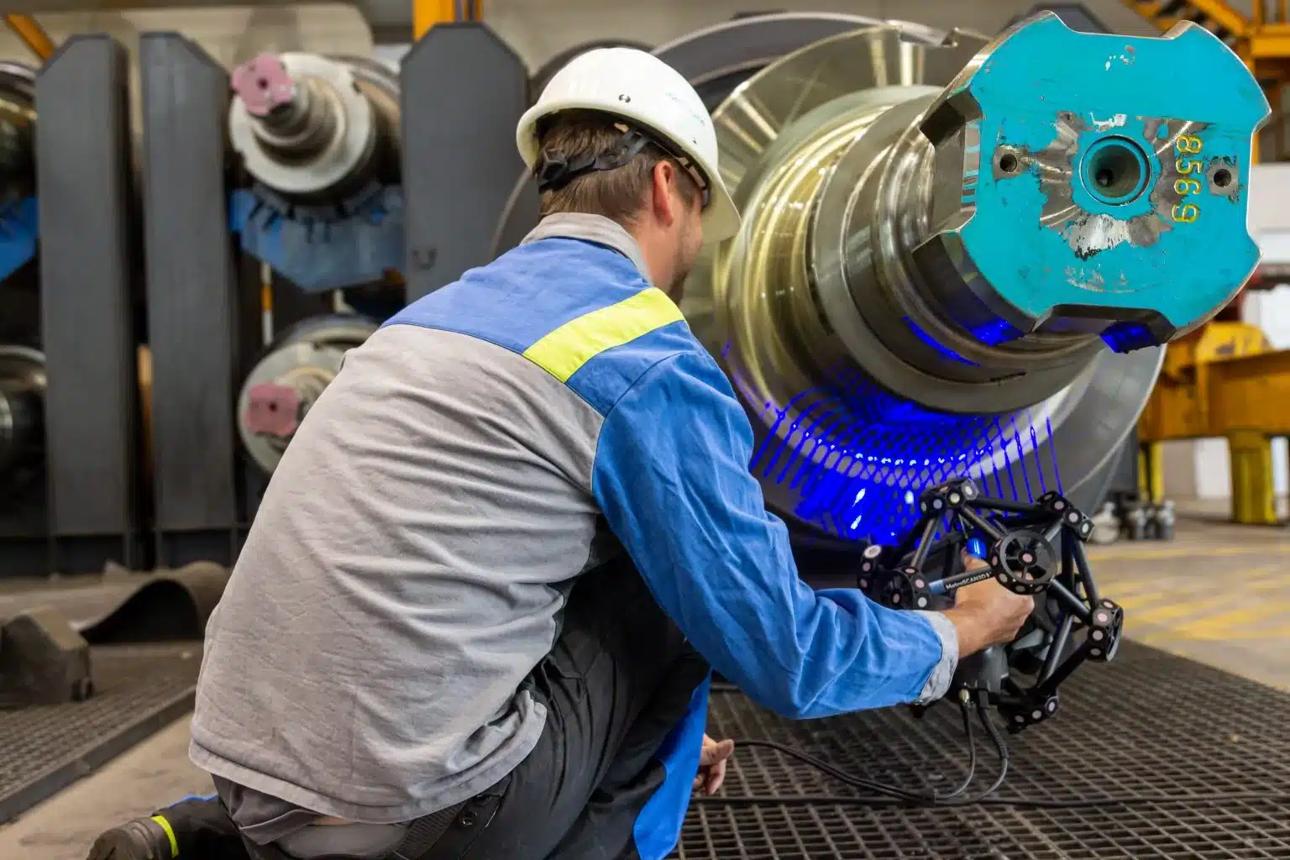
Unexpected downtime is expensive—but downtime caused by a missing replacement part can be even worse. Many manufacturers still rely on legacy equipment whose original drawings, CAD files, and technical documentation have long been lost. When a critical component wears out or breaks, sourcing a replacement may be impossible, leaving production teams scrambling for a solution. This is where 3D Scanning Services provide a significant advantage. Instead of spending weeks searching for outdated documentation or unavailable spare parts, manufacturers can digitally capture an existing component, recreate accurate CAD models, and produce replacement parts quickly. The result is faster recovery, reduced downtime, and greater control over critical manufacturing assets.
Whether the goal is repairing obsolete equipment, reproducing discontinued parts, or building a digital archive of engineering data, 3D scanning has become an essential tool for modern manufacturing and maintenance teams.
What Are 3D Scanning Services?
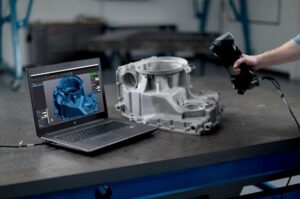
3D scanning is a process that captures the physical geometry of an object and converts it into a digital representation.
Using high-precision optical scanners, millions of measurement points are collected from the surface of a component, creating a highly detailed digital model.
According to the American Society of Mechanical Engineers (ASME), digital engineering technologies such as 3D scanning are increasingly being adopted to improve product development, inspection, and manufacturing workflows.
Typical outputs include:
- Point cloud data
- Polygon mesh models (STL)
- Parametric CAD models
- Engineering drawings
- Inspection reports
Unlike manual measurement methods, 3D scanning can accurately capture complex surfaces, freeform geometries, and intricate features that are difficult or impossible to measure using traditional tools.
Why Manufacturers Use 3D Scanning Services to Recreate Machine Parts?
Missing Engineering Documentation
Many facilities operate equipment that has been running for years or even decades.
Original CAD files, blueprints, and technical drawings may no longer exist, making replacement part production difficult when failures occur.
Obsolete or Discontinued Components
OEM suppliers frequently discontinue older products.
When spare parts become unavailable, reverse engineering is often the only practical way to reproduce them.
Minimizing Equipment Downtime
Unexpected machine downtime can result in significant production losses.
By quickly capturing part geometry and generating manufacturing-ready CAD data, companies can shorten replacement lead times and restore operations faster.
Digital Asset Preservation
Many manufacturers are digitizing legacy equipment to improve maintenance planning and reduce future risks.
Creating digital CAD libraries allows organizations to preserve critical engineering information for future production, maintenance, and redesign projects.
The 3D Scanning and Reverse Engineering Process
A successful reverse engineering project requires more than simply scanning a part. The collected data must be processed, analyzed, and converted into manufacturing-ready engineering information.
1. Part Evaluation and Inspection
The process begins with evaluating the physical condition of the sample part.
Engineers identify:
- Wear areas
- Damaged regions
- Missing features
- Critical dimensions
- Functional surfaces
This step helps determine the required reconstruction strategy.
2. High-Precision 3D Scanning
The component is scanned using professional-grade 3D scanning equipment.
Millions of surface points are captured to generate a highly accurate digital representation of the part.
The resulting dataset preserves complex geometries that would be difficult to measure manually.
3. Scan Data Processing
Raw scan data is cleaned and aligned to create a complete digital model.
Engineers remove noise, repair gaps, and optimize the mesh for further engineering work.
The output is typically an accurate STL or mesh file representing the physical component.
4. CAD Reconstruction and Reverse Engineering
The scan data is then converted into a parametric CAD model.
Depending on project requirements, engineers recreate:
- Solid models
- Surface models
- Assemblies
- Engineering drawings
This stage transforms scan data into a format suitable for manufacturing, machining, and design modification.
5. Validation and Quality Verification
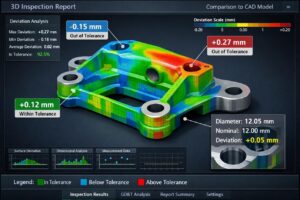
The reconstructed CAD model is compared against the original scan data.
Deviation analysis is performed to verify dimensional accuracy and ensure the recreated model meets engineering requirements.
Final deliverables may include:
- STEP files
- IGES files
- Native CAD formats
- STL files
- 2D drawings
- Dimensional inspection reports
Benefits of 3D Scanning Services for Machine Part Reconstruction
Faster Than Manual Measurement
Complex parts that might require days of manual measurement can often be captured within hours.
This significantly accelerates engineering and manufacturing workflows.
Improved Accuracy
Modern 3D scanners provide highly detailed surface data, reducing human measurement errors and improving reconstruction quality.
Better Reproduction of Complex Geometry
Organic surfaces, cast components, molds, turbine blades, and intricate mechanical parts can be recreated with a level of detail difficult to achieve through conventional methods.
Supports Manufacturing and Repair
The resulting CAD data can be used for:
- CNC machining
- Additive manufacturing
- Casting
- Tooling design
- Equipment maintenance
- Component repair
Enables Design Improvements
Reverse engineering is not limited to replication.
Engineers can analyze existing designs, identify weaknesses, and develop optimized versions with improved performance and manufacturability.
When Should You Consider 3D Scanning and Reverse Engineering?
3D scanning is particularly valuable when:
The Original Drawing Is Missing
No CAD files, blueprints, or technical documents are available.
The Part Is Worn, Damaged, or Deformed
Existing components may have experienced years of wear but still contain enough geometric information for reconstruction.
Replacement Parts Are No Longer Available
Obsolete components can be recreated without relying on the original manufacturer.
Design Optimization Is Required
Organizations can use scanned data as a foundation for redesign, weight reduction, performance improvements, or modernization projects.
Digitalization of Legacy Equipment Is Needed
Manufacturers seeking to build digital engineering databases can use 3D scanning to preserve valuable design information for future use.
Why Manufacturers Choose TAS US for 3D Scanning Services
At TAS US, we combine advanced 3D scanning technology with practical engineering expertise in reverse engineering, CAD modeling, and manufacturing support.
Our team works closely with manufacturers across automotive, industrial equipment, machinery, and production industries to transform physical components into accurate digital assets.
Whether you need to reproduce a discontinued machine part, create manufacturing-ready CAD data, or build a digital archive of critical components, our engineering team can help streamline the process while maintaining accuracy and efficiency.
Recover Lost Engineering Data with Professional 3D Scanning
Losing original drawings does not mean losing the ability to manufacture replacement parts.
With modern 3D scanning services and reverse engineering techniques, manufacturers can accurately recreate machine components, reduce downtime, and preserve valuable engineering knowledge for the future.
If your team needs support with part reconstruction, CAD modeling, or reverse engineering projects, contact TAS US to discuss your requirements and discover how 3D scanning can accelerate your manufacturing and maintenance operations.
No responses yet