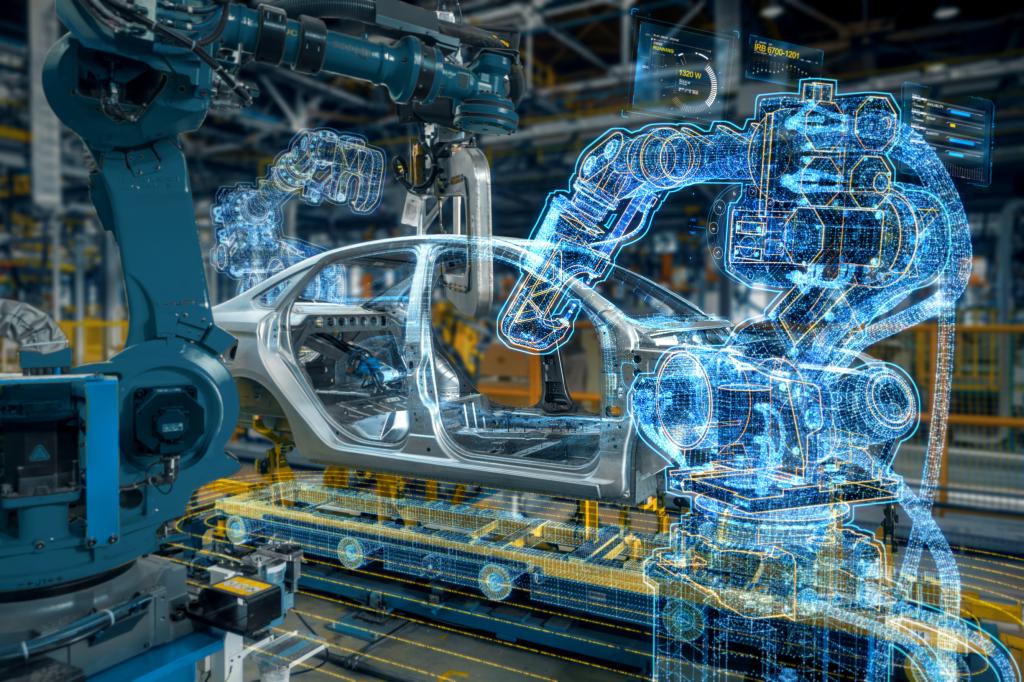
Developing Automotive Interior Components Starts with Accurate Data
Automotive 3D scanning services have become an essential part of modern automotive product development. Whether manufacturers are redesigning vehicle interiors, developing aftermarket accessories, or reverse engineering existing components, accurate vehicle geometry is critical for reducing design iterations and accelerating time-to-market.
Developing a new automotive interior component without reliable dimensional data can lead to costly redesigns, fitment issues, and extended development timelines. By using professional automotive 3D scanning services, engineering teams can capture highly accurate digital representations of vehicle interiors and transform them into CAD-ready engineering data.
What Is Automotive 3D Scanning?
Automotive interior 3D scanning is the process of capturing the physical geometry of a vehicle’s interior using advanced optical scanning technologies.
During the scanning process, millions of measurement points are collected from surfaces such as:
- Dashboard assemblies
- Center consoles
- Door panels
- Seats and seat structures
- Floor areas
- Roof liners
- Interior trim components
- Plastic and composite parts
The captured data is typically generated as:
- Point Cloud Data
- Mesh Models (STL)
- Engineering-Ready CAD Models
This digital representation of the vehicle interior provides engineers with highly accurate dimensional information that can be used throughout the product development lifecycle.
By eliminating the need for manual measurement and physical templates, automotive 3D scanning significantly improves efficiency while reducing the risk of dimensional errors.
Why Automotive Companies Use Automotive 3D Scanning Services
As vehicle designs become more sophisticated, manufacturers and suppliers require faster and more accurate methods for collecting engineering data.
Faster Product Development
Traditional measurement methods can require days of manual work to capture complex interior geometries. 3D scanning dramatically reduces data acquisition time while providing significantly more detailed information.
Improved Design Accuracy
Automotive interiors contain numerous complex curves, hidden surfaces, and intricate geometries that are difficult to measure using conventional tools. 3D scanning captures these features with exceptional precision.
Reduced Prototype Iterations
Accurate digital models allow engineering teams to validate designs earlier in the development process, minimizing costly modifications during prototyping and production.
Digital Asset Creation
Scanned vehicle data becomes a reusable digital asset that can support future engineering, manufacturing, and quality inspection projects.
Automotive 3D Scanning Services Workflow
A successful automotive scanning project involves several key stages to ensure the final data meets engineering and manufacturing requirements.
1. Project Assessment and Requirement Analysis
The process begins with evaluating project objectives and defining deliverables.
Key considerations include:
- Vehicle type and model
- Components to be scanned
- Required accuracy level
- Intended application
- Final data format
Common applications include:
- Interior redesign projects
- Aftermarket product development
- Reverse engineering
- Custom vehicle modifications
- Digital archiving
Clearly defining project goals ensures efficient data collection and downstream processing.
2. Scan Planning
Automotive interiors contain numerous hidden surfaces and restricted access areas.
Before scanning begins, engineers develop a comprehensive scanning strategy covering:
- Dashboard regions
- Center console assemblies
- Door trims
- Seating systems
- Floor structures
- Steering areas
- HVAC interfaces
Proper planning minimizes missing data and reduces post-processing effort.
3. Data Acquisition
Using industrial-grade 3D scanning systems, engineers capture highly detailed geometric information from the vehicle interior.
Depending on project requirements, scanning technologies may include:
- Handheld 3D Scanners
- Structured Light Scanners
- Laser Scanners
Modern scanning systems can accurately capture:
- Complex freeform surfaces
- Tight gaps and interfaces
- Curved geometries
- Organic design features
This level of detail is difficult to achieve using traditional measurement methods.
4. Point Cloud Processing and Mesh Generation
Once scanning is completed, raw data undergoes extensive processing.
Typical post-processing activities include:
- Scan alignment and registration
- Noise reduction
- Data cleanup
- Coordinate system alignment
- Point cloud optimization
- Mesh generation
The quality of this stage directly impacts the accuracy and usability of the final engineering model.
5. CAD Model Reconstruction
After processing, the scan data can be converted into fully editable CAD models.
These models support:
- Reverse engineering
- Product design
- Engineering analysis
- CAE simulation
- CAM programming
- Rapid prototyping
- 3D printing
This step bridges the gap between physical products and digital engineering environments.
Applications of Automotive 3D Scanning
Automotive manufacturers, suppliers, and engineering teams use 3D scanning for a wide range of applications.
Reverse Engineering
When original CAD files or technical drawings are unavailable, 3D scanning provides an efficient way to recreate accurate digital models from existing vehicle components.
This enables organizations to:
- Reproduce discontinued parts
- Improve existing designs
- Support legacy vehicle programs
- Develop replacement components
Aftermarket Product Development
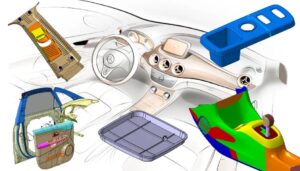
Manufacturers of aftermarket accessories rely on accurate vehicle geometry to develop products that fit correctly the first time.
Examples include:
- Storage solutions
- Dashboard accessories
- Infotainment upgrades
- Mounting brackets
- Interior customization components
Interior Redesign Projects
Vehicle interiors often require modifications to support new technologies, customer preferences, or operational requirements.
3D scanning allows engineers to redesign components while maintaining compatibility with existing structures.
Fitment and Assembly Verification
Digital scan data enables engineers to analyze:
- Part clearances
- Assembly gaps
- Surface alignment
- Interference conditions
This reduces the likelihood of assembly issues during manufacturing and installation.
Commercial and Specialized Vehicle Modifications
Many commercial vehicles require customized interiors for specific operational needs.
3D scanning helps engineering teams:
- Accelerate design development
- Improve installation accuracy
- Reduce field modifications
- Minimize project risk
Benefits of Automotive 3D Scanning Services
Organizations that integrate 3D scanning into their engineering workflows often achieve significant operational benefits.
| Benefit | Business Impact |
|---|---|
| Faster Data Collection | Shorter development timelines |
| Higher Measurement Accuracy | Reduced dimensional errors |
| Better Design Validation | Fewer engineering revisions |
| Lower Prototype Costs | Reduced development expenses |
| Improved Collaboration | Enhanced engineering efficiency |
| Digital Asset Creation | Long-term engineering value |
| Manufacturing Readiness | Faster transition to production |
Supporting Reverse Engineering and Digital Manufacturing
Automotive 3D scanning serves as the foundation for many advanced engineering workflows.
The digital data generated from scanning projects can support:
- Reverse Engineering
- CAD Modeling
- CAE Simulation
- Digital Twin Development
- Quality Inspection
- Tooling Design
- Smart Manufacturing Initiatives
As manufacturers continue adopting Industry 4.0 technologies, accurate digital representations of physical products are becoming increasingly valuable.
Industry organizations and engineering technology providers consistently recognize digital measurement and scanning technologies as key enablers of modern product development and manufacturing innovation. SAE International
Why Choose TAS US for Automotive 3D Scanning Services?
TAS US provides professional 3D scanning and reverse engineering solutions for automotive, manufacturing, and industrial applications.
Our engineering team supports the complete workflow, including:
- On-site 3D scanning
- Point cloud processing
- Mesh generation
- CAD reconstruction
- Reverse engineering
- Product development support
By combining advanced scanning technologies with practical engineering expertise, TAS US delivers accurate, engineering-ready digital data that integrates seamlessly into modern design and manufacturing processes.
Whether your project involves aftermarket product development, interior redesign, fitment verification, or reverse engineering, our team can help accelerate development cycles while improving design accuracy.
Start Your Automotive 3D Scanning Project
Accurate vehicle geometry is the foundation of successful automotive product development.
If your organization needs reliable digital data for reverse engineering, interior redesign, aftermarket product development, or manufacturing support, TAS US can provide the expertise and technology required to capture, process, and transform physical vehicle components into valuable digital engineering assets.
Contact TAS US today to discuss your project requirements and discover how automotive 3D scanning can accelerate your engineering and product development workflow.
No responses yet