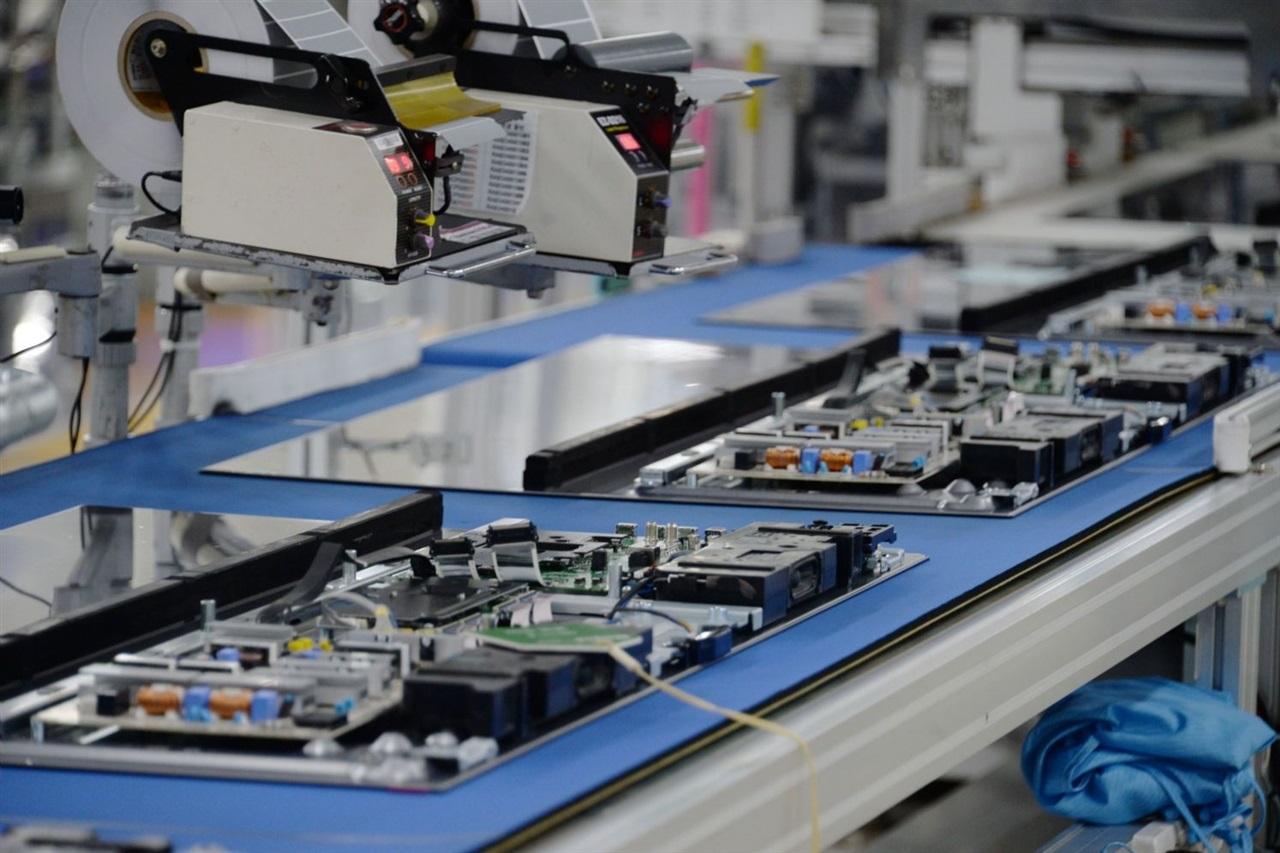
In modern manufacturing, automated fixture and conveyor systems are becoming essential for reducing operational errors and improving production consistency. While many defects are often blamed on human mistakes, the root cause is frequently process instability.
In many production environments, operational failures stem from something deeper: instability in the production process itself.
When fixture positioning is inconsistent, when clamping force varies between cycles, or when material transfer timing is not synchronized, even highly skilled operators struggle to maintain stable output quality. As production volumes increase, these small variations accumulate into defects, downtime, rework, and unnecessary operational costs.
This is where automation creates measurable value.
Automating fixture systems and conveyor systems helps manufacturers standardize positioning, reduce manual variability, improve repeatability, and create a more stable production workflow. At TAS US, we help manufacturers engineer automation solutions that minimize operational risk while improving productivity and process consistency.
Why Operational Errors Still Happen in Modern Manufacturing
Operational errors are often symptoms of unstable process design rather than poor operator performance.
Some of the most common production issues include:
- Incorrect workpiece positioning in fixtures
- Insufficient clamping force
- Wrong part orientation during loading
- Delayed or inconsistent material feeding
- Collisions between products and transfer equipment
- Machine stoppages caused by inconsistent manual operations
These issues are especially common in high-volume production environments where cycle time pressure is high and process variation directly impacts throughput.
In many factories, operators compensate for unstable systems using personal experience. The problem is that human judgment varies from shift to shift, worker to worker, and even hour to hour.
The result is reduced repeatability.
And reduced repeatability almost always leads to quality variation.
What Are Automated Fixture and Conveyor Systems?
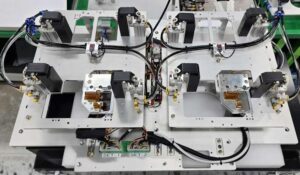
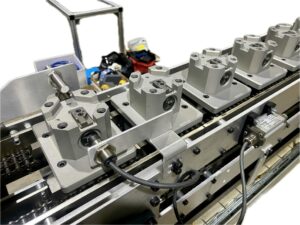
Fixture automation refers to the integration of mechanical, pneumatic, electric, or servo-driven mechanisms that automatically position, clamp, align, or release parts during production.
Instead of relying on manual placement and clamping, automated fixtures ensure that every component enters the process in a controlled and repeatable state.
Typical automated fixture systems include:
- Pneumatic clamping fixtures
- Servo-controlled positioning systems
- Sensor-assisted alignment mechanisms
- Smart fixtures with verification feedback
These systems are widely used in:
- CNC machining
- Welding cells
- Assembly lines
- Inspection stations
- Robotic production cells
The core purpose is simple: eliminate variation before processing begins.
What Is Conveyor Automation?
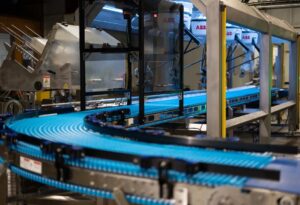
Conveyor automation refers to automated material transport systems that move products, raw materials, or semi-finished components between workstations with controlled timing and flow.
Rather than depending on manual handling, automated conveyors synchronize material movement with production rhythm.
Common conveyor automation solutions include:
- Belt conveyors
- Roller conveyors
- Chain conveyors
- Smart transfer systems
- Robotic pick-and-place integration
A well-designed conveyor system does more than transport materials.
It controls workflow.
When material arrives at the correct time, in the correct orientation, and at the correct speed, downstream processes become more predictable and stable.
How Automated Fixtures Reduce Operational Errors
1. Standardizing Workpiece Positioning
Incorrect positioning is one of the most common causes of manufacturing defects.
Even minor misalignment can cause:
- Machining inaccuracies
- Welding defects
- Assembly failures
- Dimensional tolerance issues
Automated fixtures solve this by ensuring each workpiece enters the process in the exact same position every cycle.
Instead of relying on operator judgment, positioning is mechanically controlled.
This significantly reduces:
- Misalignment
- Loose placement
- Incorrect seating
- Setup inconsistency
The result is tighter process control and improved dimensional accuracy.
2. Reducing Manual Dependency
Manual processes introduce natural variability.
Even experienced operators may:
- Skip steps under pressure
- Follow inconsistent sequences
- Apply uneven clamping force
- Miss verification checkpoints
Automation reduces dependence on individual skill by embedding process logic into the equipment itself.
When fixture clamping is automated, the system executes the same motion, force, and sequence every cycle.
That consistency dramatically lowers operator-related variation.
In other words, automation does not replace human expertise—it amplifies process reliability.
How Conveyor Automation Improves Process Stability
3. Stabilizing Material Feeding Rhythm
Production lines depend heavily on timing.
If materials arrive too early, congestion increases.
If materials arrive too late, machines sit idle.
Both conditions reduce efficiency.
Automated conveyor systems synchronize material feeding with machine cycle time.
This helps prevent:
- Bottlenecks
- Product accumulation
- Material starvation
- Unnecessary machine stops
When material flow becomes stable, the entire production line operates more smoothly.
This directly improves OEE (Overall Equipment Effectiveness).
4. Increasing Repeatability in High-Volume Production
Repeatability is one of the strongest predictors of manufacturing quality.
In large-scale production, small inconsistencies create significant cumulative losses.
For example:
A 0.5% positioning error may seem negligible.
Across 100,000 units, it can become a serious quality issue.
Automated fixtures and conveyors improve repeatability by ensuring:
- Consistent loading
- Controlled transfer
- Stable processing conditions
- Predictable cycle timing
The more repeatable the process, the more uniform the output.
For manufacturers producing high-volume components, this advantage is critical.
5. Improving Operational Safety
Safety is often overlooked when discussing automation ROI.
But it matters.
Manual intervention around moving machinery increases exposure to risk.
Common hazards include:
- Pinch points
- Unexpected motion
- Improper lifting
- Collision zones
Automated fixture and conveyor systems reduce direct human interaction with hazardous equipment.
Less manual intervention means fewer opportunities for accidents.
Organizations such as Occupational Safety and Health Administration emphasize that reducing direct exposure to moving machinery significantly improves workplace safety. OSHA
Safer operations also contribute to:
- Lower incident rates
- Reduced downtime
- Better workforce confidence
Real-World Manufacturing Example
Consider a machining line producing automotive components.
Before automation:
- Operators manually load parts
- Clamping force varies by person
- Material feeding becomes inconsistent
- Machine stoppages occur frequently
After implementing automated fixtures and synchronized conveyor systems:
- Parts are always positioned correctly
- Clamping becomes consistent
- Material arrives on schedule
- Machine idle time decreases
The outcome is measurable:
- Lower defect rate
- Improved cycle time
- Higher throughput
- Reduced rework costs
This is the true value of industrial automation.
Not simply moving faster—but operating with greater consistency.
Why Manufacturers Are Investing in Automation Now
Global manufacturers face increasing pressure to improve quality while controlling labor costs.
At the same time, production complexity continues to grow.
That combination makes process stability more important than ever.
Automation investments today are increasingly focused on reducing variability rather than merely replacing labor.
Automated fixtures and conveyor systems are among the highest-impact improvements because they address foundational process instability.
By standardizing how parts are positioned, clamped, and transferred, manufacturers can significantly reduce operational errors before defects occur.
Engineering Automation for Long-Term Performance
Operational errors rarely originate from people alone.
In most cases, they are symptoms of inconsistent processes.
When fixture setup is unstable or material transfer lacks synchronization, defects become inevitable.
Automating fixture and conveyor systems helps manufacturers build consistency into the production process itself.
The benefits extend beyond defect reduction:
- Higher product quality
- Improved production efficiency
- Better repeatability
- Reduced downtime
- Increased operational safety
At TAS US, we design automation solutions tailored to real manufacturing challenges—from fixture engineering to conveyor integration and process optimization.
If your production line is experiencing recurring operational errors, the most effective solution may not be stricter supervision—it may be smarter automation.
No responses yet